Learn how to use eNPS to measure employee loyalty, how the score is calculated – and what a good eNPS actually looks like.
What is eNPS?
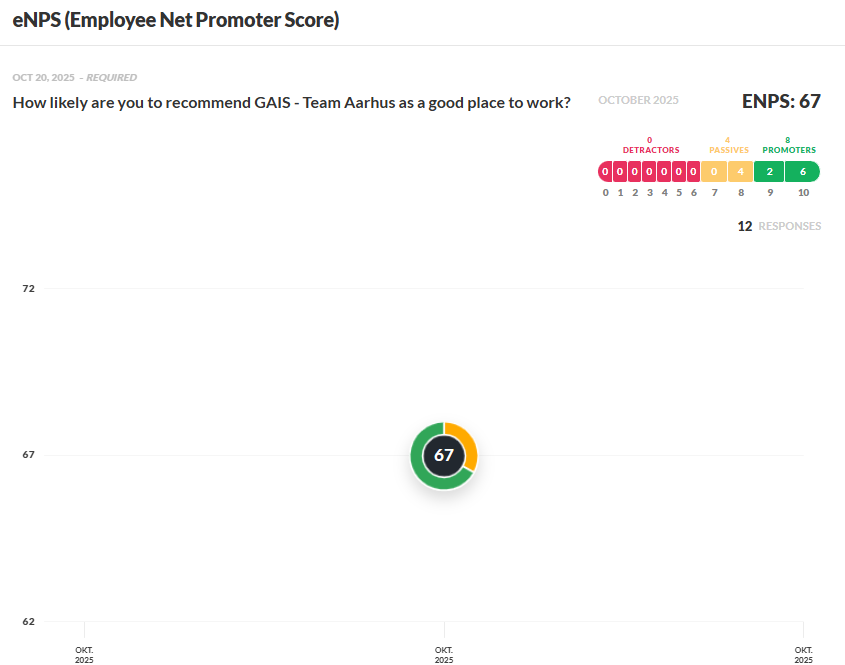
eNPS stands for Employee Net Promoter Score and is a simple method for measuring employee loyalty.
Employees answer one question:
Responses are divided into three categories:
0–6: Detractors – dissatisfied employees
7–8: Passives – neutral employees
9–10: Promoters – loyal ambassadors
The survey is conducted anonymously, which is essential to ensure honest and reliable results.
In practice, eNPS has become an informal standard across platforms and industries, making it possible to benchmark results across organisations.
What Do the Categories Mean?
Detractors
Employees who are dissatisfied with the workplace or their role. They would not recommend the organisation – and may even discourage others from applying.
Passives
Generally satisfied but not highly engaged. They are more open to new job opportunities and neither actively promote nor criticise the organisation.
Promoters
Engaged and loyal employees. They actively recommend the workplace and contribute positively to the company’s reputation.
Benefits of Measuring eNPS
eNPS provides:
A quick pulse check on employee loyalty
Insight into potential employee turnover
An indicator of engagement and overall well-being
A benchmarkable KPI
Improving eNPS often signals positive organisational development. Moving employees from detractors to passives – and from passives to promoters – can positively impact retention, productivity, and absenteeism.
How Is eNPS Calculated?
eNPS is calculated by subtracting the percentage of detractors from the percentage of promoters:
eNPS = % Promoters – % Detractors
The score can range from -100 to +100.
Example:
70% promoters
10% passives
20% detractors
eNPS = 70 – 20 = 50
Passives are not included in the actual calculation.
What Is a Good eNPS?
An eNPS score can range from -100 to +100.
General benchmarks:
-100 to 0: Critical level – improvement is needed
0 to 30: Acceptable, but with clear room for improvement
30 to 70: Strong score
70 to 100: Excellent – top-performing organisations
Historically, scores of:
10–30 have been considered good
50+ very strong
However, benchmarks vary significantly between industries. Therefore, the most important comparison is your own development over time.
A score above 0 means you have more promoters than detractors. Still, organisations should consider what it means if a large proportion of employees would not actively recommend the workplace.
Source: Loyalty Group International
Benefits of Measuring eNPS
eNPS provides:
A quick pulse check on employee loyalty
Insight into potential employee turnover
An indicator of engagement and overall well-being
A benchmarkable KPI
Improving eNPS often signals positive organisational development. Moving employees from detractors to passives – and from passives to promoters – can positively impact retention, productivity, and absenteeism.
The Limitation of eNPS
eNPS shows how loyal employees are – but not why.
For that reason, eNPS should be supplemented with follow-up questions or combined with a broader employee engagement or wellbeing survey.
When combined with a comprehensive measurement framework, loyalty can be analysed alongside drivers such as leadership, meaning, balance, results, and collaboration.
Supporting Questions
To make eNPS actionable, consider adding follow-up questions:
For Detractors (0–6):
What can we improve?
What would it take for you to recommend the workplace?
For Passives (7–8):
What would need to change for you to rate us 9 or 10?
What influenced your score?
For Promoters (9–10):
What are you particularly satisfied with?
What makes the workplace recommendable?
Although passives are not included in the score calculation, they are often the largest and most dynamic group. They can quickly move in either direction.
Focus on Development
Your first eNPS measurement becomes your baseline.
The key is not the score itself – but whether you systematically act on feedback and see positive development over time.
eNPS is not a goal in itself. It is a strategic indicator of how employees experience the workplace – and where there is potential to strengthen loyalty, engagement, and retention.
If you’d like, I can also:
Make it more sales-oriented
Adapt it to a website or landing page
Was this article helpful?
That’s Great!
Thank you for your feedback
Sorry! We couldn't be helpful
Thank you for your feedback
Feedback sent
We appreciate your effort and will try to fix the article